
Zapier AI Review: The Orchestration Platform
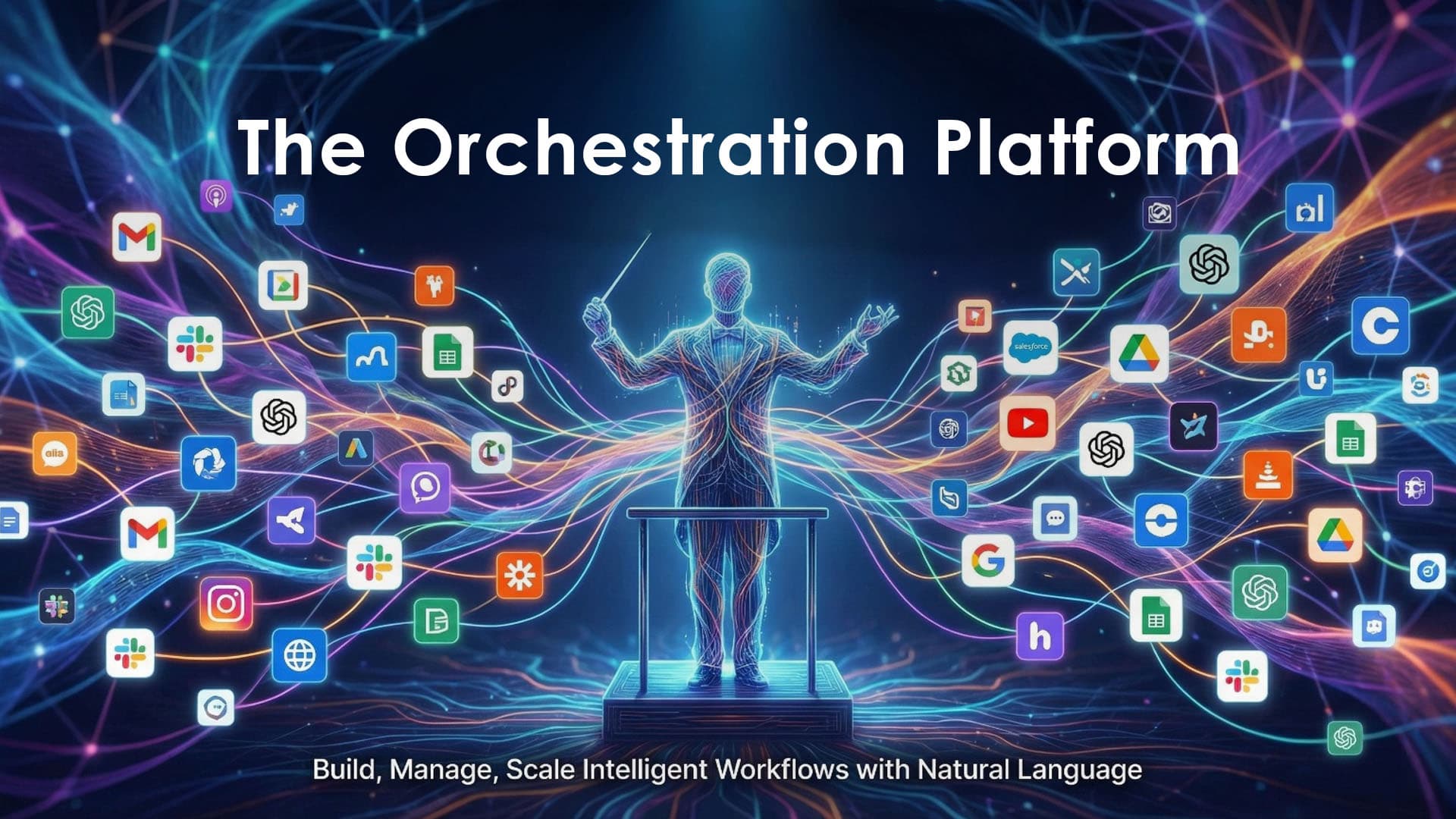
Zapier has long been the undisputed king of no-code automation, known for its "if this, then that" simplicity. However, in 2025, the company aggressively pivoted to become an AI Orchestration Platform. Zapier AI is a suite of artificial intelligence features embedded directly into the ecosystem, moving the platform beyond simple trigger-action sequences toward smart workflow orchestration where AI makes decisions.
The pivot is significant. Zapier used to be simple: "If I get an email, send a Slack message." Now, with Zapier Central and Agents, it promises: "Read my email, research the sender on LinkedIn, draft a reply, and update my CRM."
It aims to allow non-developers to design workflows, chatbots, and AI agents across 8,000+ apps using natural language.
The Identity Crisis
Despite its innovation, Zapier is currently suffering from an identity crisis. It tries to remain a simple tool for beginners while charging enterprise prices for features that competitors like Make or n8n often do cheaper and better.
The platform has seen steep price hikes over the last few years, many long-time users report their bills jumping 2–3x due to pricing changes and rising task usage, and it charges penalties for exceeding limits, with virtually zero customer support for lower tiers, creating friction for long-time users.
The AI Suite: Core Components
Zapier AI creates a layer of built-in assistants on top of its massive automation platform. Here is the breakdown:
Zapier Central (The "Agent" Workspace)
A chat interface (similar to ChatGPT) that has "hands." You can teach a bot "Behaviors" so it acts as a 24/7 intern monitoring a Google Sheet or Inbox and taking autonomous action (e.g., "Whenever a lead lands in HubSpot, search their company on Google News...").
The Limit: While it is one of the most user-friendly "Agent Builders," it is often slow in real-time conversations with data and still struggles with complex multi-step reasoning compared to custom-coded agents, especially on messy, multi-source workflows.Zapier Copilot (The Builder)
A text-to-workflow tool where you describe your goal (e.g., "Send a text when I get a Calendly booking") and it builds the Zap structure for you.
The Verdict: Mediocre. It is great for "sketching" the skeleton, but it often selects the wrong specific trigger (e.g., "New Event" instead of "Invitee Created") or fails to map data fields correctly. You always have to double-check its work.Zapier Canvas
A diagramming tool (like Miro) that turns into code. Reviewers note this is excellent for documentation; you can map out your entire business process visually and then click "Build" to turn the boxes into actual Zaps.Zapier MCP (Managed Connectivity Platform)
Targeted at developers, this allows seamless API connections to thousands of apps without custom coding, powering the AI tools behind the scenes.
Workflow & Capabilities
Natural Language Workflow Builder
You can describe automation in plain English (e.g., "When someone fills out this Typeform, add their info to CRM..."). This dramatically lowers the entry barrier for non-technical users.
AI-Powered Filters & Decisions
Zapier now supports conditional logic powered by machine reasoning (e.g., routing leads based on sentiment analysis).
Maturity Warning: This feature is still maturing; it handles straightforward logic well but users report limitations in complex, highly customized scenarios.
GPT-Enhanced Actions
You can embed GPT-like intelligence directly into Zaps, turning each step into a mini-LLM task (drafting emails, summarizing docs, formatting data).
Flexibility: You can choose your provider (OpenAI, Anthropic, Gemini, Azure) or bring your own API key.
Free Options: Select models like GPT-4o mini and Gemini 2.0 Flash–class models are available on lower tiers, sometimes with free usage quotas or bundled credits.
AI Chatbots & Agents
You can build customer-facing bots trained on internal knowledge stores (websites, tables, files) for real-time interactions.
Specific Use Cases
Productivity & Operations Teams: Shines at automating repetitive processes like auto-tagging leads, routing support requests, and syncing data.
Sales & Marketing: Used for lead nurturing (triggering personalized follow-ups) and CRM hygiene without manual intervention.
Small Teams & Solopreneurs: Offers a way to make complex integration simple ("describe what you want") without dev resources.
Freelancers & Consultants: Reduces manual configuration time and serves as a rapid prototyping platform for client workflows.
Pros & Cons: The Honest Truth
✅ The Strengths
Undisputed King of Integration: With 8,000+ integrations (some sources say 7,000+), it connects to every major business tool.
Accessible AI: It bridges the gap between AI and workflow automation elegantly. Users praise its ability to eliminate manual busywork without code.
User-Friendly Interface: G2 and review sites describe it as a "lifesaver" and "super straightforward" for non-techies.
Enterprise-Ready: Unlike open-source alternatives, it offers SOC 2 (Type II), SOC 3, GDPR, and CCPA compliance, along with SSO and granular permissions.
"Zap Guesser": Helps non-technical users get a working draft workflow instantly.
Massive Template Library: Thousands of pre-made templates reduce setup time.
❌ The Weaknesses
Costs Escalate Quickly: The "Per-Task" pricing model can become a financial death trap for high-volume AI automation. AI usage dramatically increases task consumption and forces upgrades.
NO REFUNDS: The platform is extremely strict on refunds. Many users describe it as having “no refunds in practice” for surprise charges or misconfigurations, even if support later confirms only limited, case-by-case exceptions.
Reliability & Support Issues: There is virtually zero customer support for lower tiers. One user noted: "There is absolutely NO customer support. They only provide an option to HIRE someone... as if paying for automations that don't work wasn't enough."
Agents Are Immature: Agents can technically chain actions and pull from multiple sources, but they still cannot reliably handle complex looping or multi-source reasoning without careful guardrails, especially compared to custom frameworks.
Complexity Limits: It excels at linear workflows but struggles with complex multi-branch logic where competitors excel.
Dependency on Marketplace Apps: AI automation only works with supported apps. If a niche integration isn't available, workflow possibilities are limited.
Fragility at Scale: At scale, workflows can fail silently or require error-handling workarounds; agencies report thousands of wasted tasks when zaps break before alerts fire.
Pricing
Free
You get 100 Tasks per month. A "Task" is not a "Workflow." If your workflow is "Trigger -> Filter -> Action," that is 2 tasks every time it runs. If you have a simple automation that runs 5 times a day (e.g., saving 5 email attachments), you will burn your 100 tasks in 20 days.
The Killer Constraint: No Multi-Step Zaps. You can only do "A triggers B." You cannot do "A triggers B, then C." This makes it useless for real business logic.
Update Time: It only checks for new data every 15 minutes.Professional (from $29.99/mo; $19.99/mo yearly equivalent)
Unlocks Multi-Step Zaps (essential) and Filters (logic).
The Limit: Starts at 750 Tasks. If you build a loop or a busy automation (e.g., "Every time someone likes my tweet"), you can burn 750 tasks in an afternoon. Zapier will then ask you to pay for "extra tasks" at a premium rate.
Best For: Solopreneurs with low-volume, high-value automations (e.g., "New Sale -> Create Invoice").Team ($103.50/mo)
Unlimited Users. You don't pay per seat.
You are mostly paying for Shared Folders (so you don't have to share your login password with your developer).
Task Count: Starts at 2,000 tasks, which is surprisingly low for a $100/mo plan.
The "AI Double-Tax" Trap
The Trap: If you use the standard "ChatGPT" app inside Zapier, you pay twice:
Zapier Tax: The "Ask ChatGPT" step counts as 1 Task. (Cost: ~$0.04/task on cheaper plans).
OpenAI Tax: You must connect your own OpenAI API Key. You pay OpenAI directly for every token processed.
The Cost: If you process 1,000 emails a month, you burn 1,000 Zapier Tasks (forcing an upgrade to the $30+ plan) AND you pay OpenAI ~$5–10 for the tokens.
The Loophole: Look for the "AI by Zapier" app (not the "ChatGPT" app).
Why? It is a limited, native tool that sometimes offers free basic generations without an API key, but it is much dumber and harder to control than the full ChatGPT integration.
Zapier vs. The Competition
Zapier vs. Make (formerly Integromat)
Make strikes a better balance between ease of use and advanced functionality. It excels at complex scenarios with multiple branches/loops and provides better visual control and transparency. Make is much more affordable at scale.
The Verdict: Zapier wins on speed to value, a broader catalog, and enterprise governance. However, Make is better for AI-heavy flows and complex logic, while Zapier is better for simple, linear workflows and non-technical teams.
Zapier vs. n8n
n8n is best for self-hosting (data sovereignty) and offers complete code control (JavaScript). It positions itself as a truly AI-native platform with advanced LangChain integration (nearly 70 AI-dedicated nodes) and is much cheaper due to execution-based pricing.
The Verdict: Zapier wins on ease of use, it requires zero technical knowledge. n8n is for technical users who want full customization and low costs; Zapier is for those who prioritize ease of use over cost.
Final Verdict
Decision Guide:
BUY IT IF: You are a non-technical founder with a healthy budget who values speed over cost. It is ideal if you need "Zapier Central" to deploy agents easily, need to orchestrate real business workflows across a fragmented stack, can clearly quantify the time saved on repetitive work, or have at least one team member comfortable "thinking in systems."
AVOID IT IF: You are scaling (per-task pricing will destroy your budget on high volume), you are price-sensitive, or you need mission-critical reliability where you cannot afford for an AI step to misbehave without support.
Final Advice: If your budget allows and simplicity trumps depth, go for it (start with the free tier). Otherwise, test alternatives for better value. As one founder put it, using Zapier AI is like "delegation to AI workers."