
Webflow Review: The "No-Code" Tool for Professional Designers
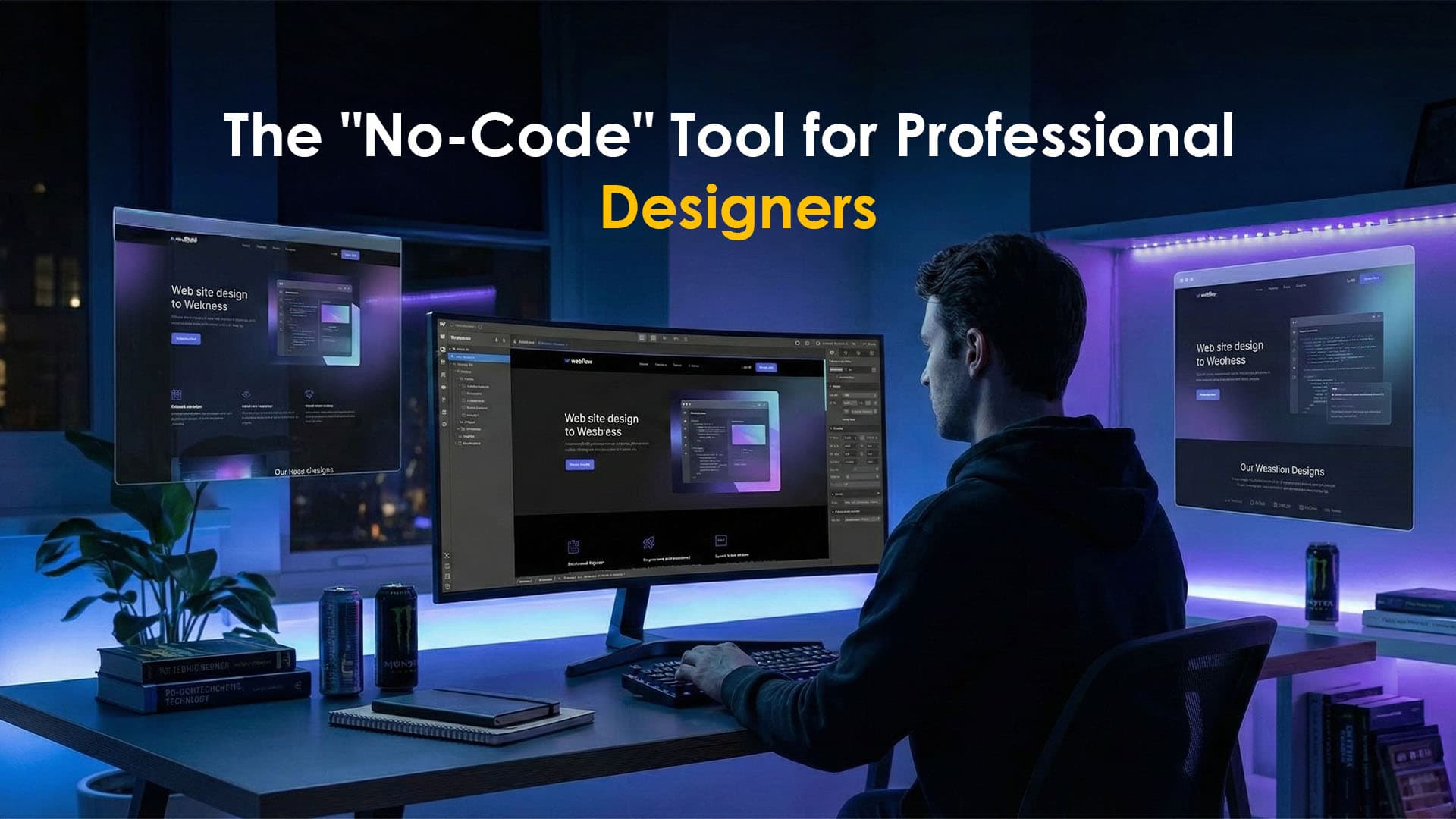
Webflow is a visual web development platform that bridges the gap between no-code ease and full-code power. Unlike simple drag-and-drop builders, Webflow puts the full power of HTML, CSS, and JavaScript into a visual canvas.
It is built specifically for professional web designers, agencies, and marketing teams who demand pixel-perfect control over their creations. If you want to build a truly custom, high-performance marketing site, portfolio, or e-commerce store that doesn't look like a template, Webflow is your answer.
Webflow embraces web fundamentals. While you don't write code, you will benefit greatly from understanding concepts like the box model and CSS classes. In return, it generates clean, semantic HTML, CSS, and JavaScript, which you can even export for full control if needed.
The Workflow: Visual Coding
Working with Webflow feels like designing directly with the building blocks of the web.
The Canvas: You add standard HTML elements (divs, headings, buttons) to pages.
The Panel: You style them through a visual panel that mirrors CSS properties.
The Output: Behind the scenes, this translates into clean, production-ready code.
Hosting & CMS
Webflow excels at websites focused on content, marketing, and e-commerce. It includes a powerful, flexible built-in Content Management System (CMS) for blogs, portfolios, and team directories. Once built, sites are hosted on a global CDN (Content Delivery Network) for speed and reliability.
Advanced Animations
Webflow’s animation engine is powered by an integration with GSAP (GreenSock Animation Platform). The timeline-based engine supports sophisticated animations triggered by:
Page load
Scroll
Clicks
Custom navigation
Its enhanced timeline editor makes creating professional-grade animations accessible without coding. Additionally, AI-assisted animation prototyping and real-time engagement analytics help you optimize the user experience with personalized dynamic motion effects.
Pros & Cons: The Honest Truth
✅ The Strengths
Pixel-Perfect Design Freedom: It offers the highest level of visual control among no-code builders, allowing for fully custom, responsive sites without templates.
Clean, Professional Code: The clean semantic code enhances site performance and SEO. You can export the code for external use.
All-in-One for Content: Its CMS and e-commerce tools are ideal for conversion-optimized marketing sites. It supports content-commerce integrations, effectively blending content marketing with sales.
Strong Community: A large, active user community and certified partners provide vast learning resources.
❌ The Weaknesses
Requires Web Fundamentals: Learning Webflow demands familiarity with responsive design, CSS, and layout principles. It is harder for beginners relative to simple drag-and-drop builders.
Not for Web Applications: Webflow is not designed for logic-heavy web apps. It has limited backend logic and user authentication capabilities. Adding app-like functions requires complex third-party integrations, increasing cost and complexity.
Confusing Costs: While base plans are affordable, total costs can escalate due to add-ons for bandwidth, CMS limits, and seats.
Primarily Web-Only: It lacks native app builder functionality.
Pricing Breakdown
Webflow offers a tiered pricing structure that can get complex depending on your scale.
Entry Level: Free plans are available. Site plans start around $14/month (billed annually) for basic features.
Advanced Needs: Enhanced CMS, e-commerce, and team collaboration plans range up to $212–$235/month.
Hidden Costs to Watch: Pricing complexity arises from varying limits on bandwidth, CMS items, and transaction fees. You must also consider the cost of adding extra "seats" to workspaces.
Enterprise: Custom pricing is available for large-scale needs.
Full pricing details are available on Webflow’ official website
Webflow vs. The Competition
Webflow vs. Wix & Squarespace
Webflow occupies a unique position. It delivers far more power and flexibility than Wix or Squarespace, which prioritize simplicity but offer significantly less design control.
Webflow vs. WordPress
Webflow is the superior choice for designers who want a secure, maintenance-free environment with total visual control. WordPress, however, remains the better option for massive, content-heavy sites or those requiring extensive plugin functionality for complex features like memberships.
Webflow vs. Gatsby & Next.js
Conversely, fully coded frameworks like Gatsby or Next.js provide limitless power but require deep coding expertise. Webflow balances these extremes.
Verdict
Webflow is widely chosen by professional designers and teams needing bespoke, high-performance websites. While it is less suited for highly dynamic, logic-heavy apps, it remains essential for sophisticated marketing sites, portfolios, and e-commerce experiences where pixel-perfect design and speed matter most.