
Typecast Review: The "Director's" AI Voice & Video Suite
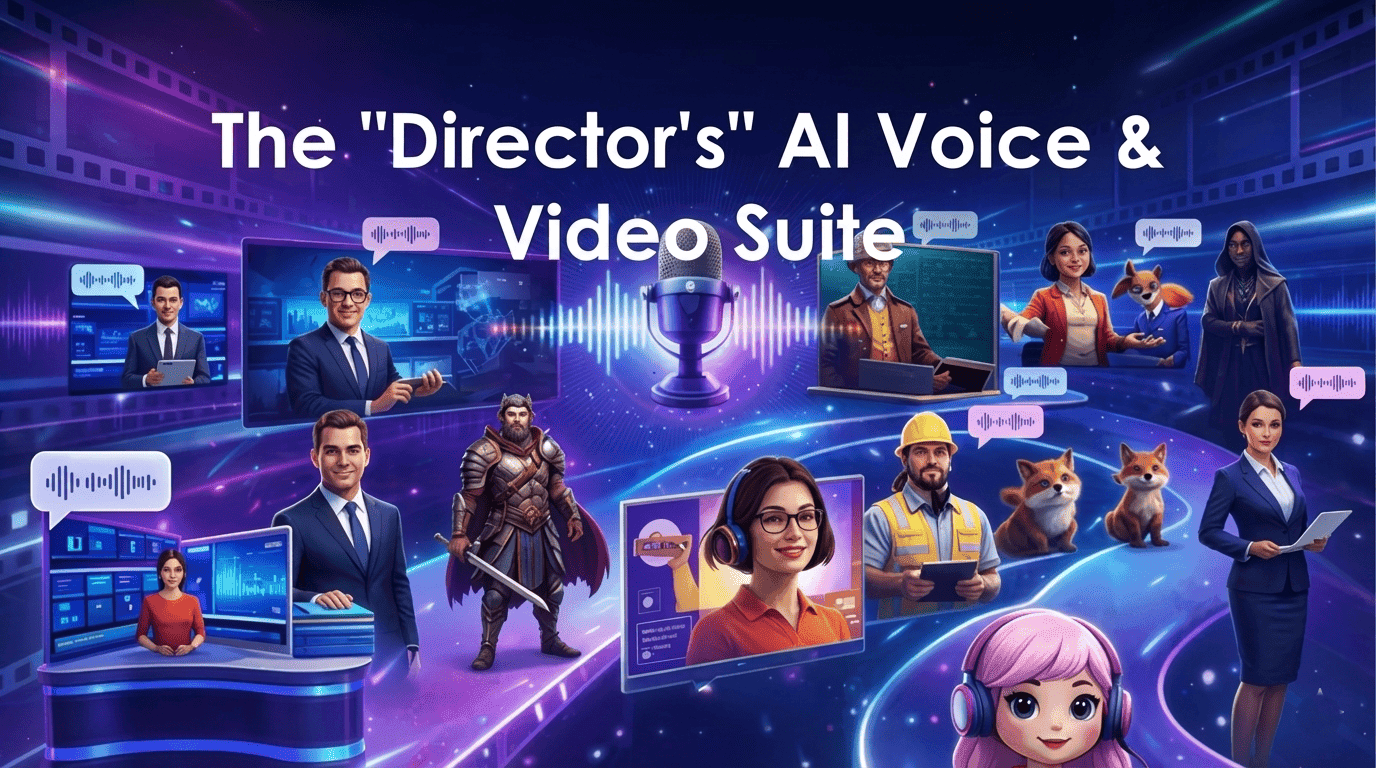
If you are looking for more than just a standard voice generator, Typecast differentiates itself by positioning itself as a full-fledged video production platform rather than just a voice tool.
Its unique selling proposition revolves around the concept of “casting AI voice actors.” While competitors often focus on pure audio fidelity, Typecast focuses on multi-character, emotional performance. It allows creators to cast specific character voices for dialogues and animate avatars to lip-sync along, making it a go-to tool for visual storytelling, audio dramas, and gaming content.
The platform boasts a library of 600+ AI voice characters (“AI actors”) across 20+ languages.
The Workflow: Script-Based Casting
The interface is designed around a script editor, making the workflow highly intuitive for writers and game developers who think in terms of scenes rather than single blocks of narration.
1. Emotional Control (The Secret Sauce)
Built on Neosapience’s proprietary Speech Synthesis Foundation Model, Typecast allows AI to adjust voice patterns based on mood.
Director-Level Control: You get detailed control via emotion presets (happy, sad, angry, whispering) and intensity sliders.
Pacing: Adjust style and speed to fit the dramatic beat of a scene.
2. Video & Avatars
Multi-Character Dialogue: The "Casting" workflow lets you assign different actors to specific lines in a script easily.
Virtual Actors: The integrated video editor lets you generate talking-head videos from avatars or uploaded images that automatically lip-sync to the voice (includes auto-subtitles).
All-in-One Assembly: You can assemble full video presentations with avatars, background music, text, and images on a single timeline.
3. For Developers (Technical Specs)
Typecast offers robust tools for integration:
API: A REST API with real-time streaming support.
Automation: Includes webhooks for automated content pipelines.
Pros & Cons: The Honest Truth
✅ The Strengths
Unmatched Emotional Control: The ability to fine-tune emotional intensity provides performance direction not found in mainstream TTS platforms.
Character-Centric Library: With personas like rappers, news anchors, and anime characters, it is ideal for storytelling and niche content (TTRPGs, gaming, anime).
Excellent for Dialogue: The workflow is specifically optimized for multi-character conversations and screenplays.
Effective Lip-Sync: Strong lip-syncing capabilities make it suitable for faceless YouTube channels and explainer videos.
Affordable Entry: Offers a free tier and accessible pricing for solo creators.
❌ The Weaknesses
Rhythm & Pacing Issues: While emotionally expressive, some voices lack the natural cadence of top-tier engines like ElevenLabs, especially in long-form narration.
Restrictive Pricing Model: Pricing is based on monthly download minutes/hours. Video projects consume minutes quickly, making it expensive for high-volume users.
Strict Limits (Free Plan): The free plan functions mostly as a trial with very limited downloadable content.
Inconsistency: Not all voices support all emotions; quality varies by "actor."
Cloning Limitations: Voice cloning is restricted to English/Korean and locked behind Pro/Business plans.
Learning Curve: Mastering detailed emotion and pacing controls takes time compared to "one-click" generators.
Pricing & Usage
Typecast offers a tiered model based on download time:
Free Plan
You get 5 minutes of download time per month and only 5 Avatar Generations (often a lifetime/trial cap, not a monthly reset). Once you burn these "first 5 times" testing the tool, you are largely locked out of video creation until you pay.
The Catch: You must include "Powered by Typecast" or similar credit in your video description. If you forget, you are violating their terms.
Resolution: Capped at 720p (HD).Basic ($8.99/mo)
This looks like a starter video plan, but it is actually a Podcast Plan. You get 60 Minutes of audio download time. Excellent for audiobooks or narration.
10 Video Generations per month. A "Generation" is burnt every time you render a scene to check the acting. If you make one 3-minute video and re-render it 4 times to fix mistakes, you have used 50% of your monthly allowance on one video.
Best For: Audio-only users. Do not buy this for video.Pro ($32.99/mo)
This is the minimum requirement to run a channel.
50 Video Generations per month. This gives you the "buffer" to make mistakes, edit, and re-render without hitting a wall. You also unlock 1080p (Full HD) and 4K download support. The 720p on lower plans looks blurry on YouTube; this looks crisp.
You get 2 Hours of download time per month.
Hidden Perk: 1 Custom Voice Slot. You can clone your own voice so the avatar speaks like you.Business ($89.99/mo)
The Value: 6 Hours of download time and 200 Generations.
Best For: Daily content creators or agencies managing multiple channels.
Legal, Licensing & Ethics
Commercial Rights:
Free Plan: Strictly limited. Primarily for testing; commercial use may require attribution or be restricted.
Paid Plans: Include a commercial license. Monetization on YouTube and podcasts is allowed.
Ownership: Grants a non-exclusive right to use generated content.
Provenance: Parent company Neosapience, Inc. publishes research and uses proprietary models, not just wrappers.
Typecast vs. The Competition
Typecast vs. ElevenLabs
The Verdict: Typecast wins where video, avatars, and explicit emotional tags are central (e.g., character-driven YouTube, games). ElevenLabs is the clear winner for pure audio quality and realism but lacks integrated video tools.
Typecast vs. Murf.ai
The Verdict: Typecast is better for creative/character work (anime, stories). Murf is stronger for business/training content with polished corporate workflows.
Typecast vs. Synthesia
The Verdict: Typecast is more affordable and creator-oriented (stylized/anime avatars). Synthesia is the choice for "boardroom" avatars and large enterprise training.
Verdict
Typecast is the storyteller's studio.
Best For: Creative storytelling (Audio Dramas, Children’s Stories), Niche Content (TTRPG streams, Anime, Gaming), and Faceless YouTube channels.
Not For: Standard corporate narration where pure audio fidelity is the only metric.