
Suno AI Review: The "ChatGPT for Music"
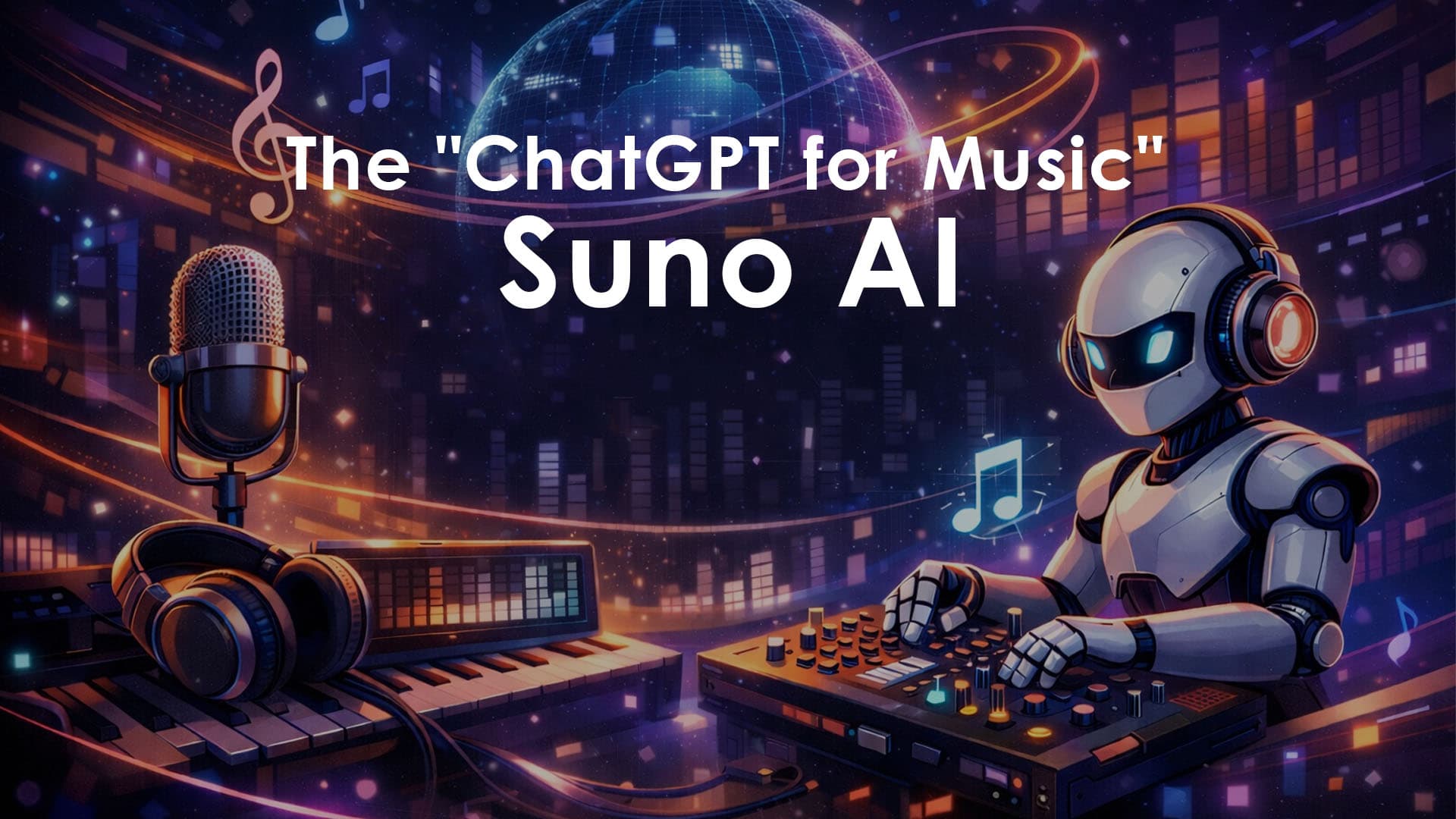
Ever dreamed of becoming a musician? Suno AI claims to make it a reality. Often dubbed the "ChatGPT for Music," it is a generative AI platform capable of producing radio‑ready, 3‑minute songs complete with vocals, lyrics, melodies, and backing tracks from simple text prompts in under 60 seconds.
While it started as a “fun toy,” Suno has evolved into a serious production tool, entering a more corporate, rights‑focused era following major legal battles. It is currently one of the most accessible music generators on the market. However, while it shines in accessibility, it comes with significant ownership caveats that most influencers overlook.
The Workflow: From Text to Tracks
Suno’s engine has moved from low‑quality snippets to Hi‑Fi (44.1kHz) stereo audio. The v5 updates (2025) introduced enhanced emotional vocals (described as surprisingly human), longer coherent tracks (often up to 4+ minutes), and better prompt adherence, especially around mood and genre.
1. Generation Modes
Simple Mode: Type a description like “A sad acoustic ballad about a lost dog” to get a full song.
Custom Mode: Enter specific lyrics, style tags, and structure for more control.
Extend/Remix: Continue clips or tweak existing outputs. The default track length is typically well over 90 seconds, unlike competitors that cap most generations at ~30 seconds.
2. Key Tools
Audio Input (“Covers”): Arguably the most impressive feature. You can record yourself tapping a rhythm or humming, and Suno transforms it into a full orchestral score or heavy metal track.
Voice Personas: If you generate a voice you like (e.g., a gritty rock singer), you can “lock” it to generate an entire album using that exact singer across genres.
Suno Studio (launched 2025): A DAW‑like editor for rearranging sections, editing lyrics, and fine‑tuning. Beginners often find this overwhelming but powerful once learned.
Remaster Mode: Upscales older generations to newer engine quality where supported.
Stem Separation: Paid users can export separate stems (vocals, drums, bass, etc.) for external mixing and mastering.
3. Success Rate
Reviewers note it works “beautifully” maybe 60% of the time; the other 40%, it changes the vibe too much, ignores key tags, or ruins the original "happy accident" feel.
Pros & Cons: The Honest Truth
✅ The Strengths
Vocals: It generates some of the most human‑sounding AI vocals, capturing breaths, vibrato, and emotional cracks better than many robotic competitors.
Speed & Barrier: Creates full songs in under 60 seconds with essentially zero musical skill required.
Complete Structure: Unlike tools that output short loops, Suno understands song structure (Verse → Chorus → Bridge) and can sustain multi‑minute arrangements.
Generous Free Plan: Free users get 50 daily credits, which equates to roughly 10 full songs per day, since each song costs around 5 credits.
Genre Versatility: Handles everything from pop/rock to classical, EDM, metal, and niche 2025 styles like “neurofunk.”
❌ The Weaknesses
“Suno Sound”: The market is flooding with Suno‑generated tracks. Listeners increasingly recognize a distinctive sheen and density in the mixes sometimes derided as “AI slop” especially in high frequencies.
Audio Quality for Pros: While mixes sound impressive out of the box, producers report bleed between stems and vocals that can feel slightly synthetic when soloed, complicating professional mixing.
No‑Rollover Credits: Unused daily credits do not roll over; they reset every 24 hours. For some users, this creates a “use it or lose it” pressure that encourages burning credits on mediocre ideas.
Support & Billing Complaints: Independent reviews mention slow customer support and confusion around billing, refunds, or plan changes, which some users interpret very negatively.
Limited Control: Prompt fragility remains an issue; Suno sometimes ignores structural tags, genre constraints, or delivers gibberish or repetitive lyrics.
Pricing
Free
You get 50 Credits per day (renews daily). That’s roughly 10 songs every day, which is incredibly generous for a free tier.
The Killer Trap: No Commercial Rights. You do not own the songs. If you generate a viral hit on the Free plan, Suno owns it, not you. You cannot upload it to Spotify, YouTube (monetized), or use it in an ad.
The Tech Limit: You are locked to Model v4.5. The mind-blowing, realistic vocals you hear on Twitter are usually from Model v5, which is locked behind the paywall.
Generation can be slow during peak hours.Pro ($10/mo)
You are paying for Commercial Ownership. Anything you generate from this moment on is legally yours. You can put it on Spotify and keep 100% of the royalties.
The Volume: 2,500 Credits/month (~500 songs).
The Quality Upgrade: Unlocks Model v5 (the latest, most realistic model). You also get Stem Separation. You can split a song into vocals, drums, bass, and melody to mix them in a real DAW (like Ableton).Premier ($30/mo)
You get 10,000 Credits/month (~2,000 songs).
The Killer Feature: Suno Studio. This is a web-based workstation (DAW) that lets you edit the track more deeply than the standard generator.
Buy this only if you need the Web Studio or massive volume.
Use Cases
Content Creators: YouTubers, streamers, and podcasters needing catchy, royalty‑free background tracks or intros.
Accessibility: Excellent for visually impaired or elderly users to create music via voice or text input, without needing a DAW.
Therapy & Play: Reportedly used in hospitals and wellness settings as a creative outlet and mood‑lifting tool.
Musicians: Prototyping melodies, testing arrangements, or breaking writer’s block before moving ideas into a traditional DAW.
Legal, Licensing & Ethics
The “Ownership” Myth
Marketing copy often leans toward “You own your songs” on paid plans, but the reality has two layers:
Contractual Rights with Suno:
Free/Basic Tier: Suno retains ownership; you get a non‑commercial license only, typically with attribution requirements. You cannot legally monetize these tracks.
Pro/Premier Tiers: Suno’s terms say it assigns you the rights to outputs created while you are a paying subscriber and grants you a commercial use license. Those rights generally remain even after cancellation.
Copyright Law Reality:
Under current U.S. law, purely AI‑generated works may not qualify for full copyright protection without meaningful human authorship. This means you can often use and monetize your Suno tracks, but registering them and enforcing them like traditional compositions can be legally murky.
So if you make a hit on Suno, someone else uploading a very similar track to Spotify doesn’t automatically mean it is “public domain,” but your legal leverage may be weaker than with a fully human‑composed song.
Lawsuits
Suno is currently being sued by major record labels (Sony, Universal, Warner) for alleged unauthorized use of copyrighted recordings in training its models. Suno has admitted that its training data includes major‑label material and is arguing fair use in response.
Commercial Rights & the “Remix” Trap
Free Plan: Non‑commercial use only.
Paid Plans (Pro/Premier): Include commercial rights for songs created while subscribed, subject to the broader legal uncertainties above.
Remix Feature: If you use “Remix” or extend someone else’s public Suno track, your rights may depend on their settings and Suno’s shared/derivative rules, which can restrict or complicate monetization. Always check the licensing flags on the source track.
Suno AI vs. The Competition
Suno vs. Udio
The Verdict: Udio generally wins on overall polish and professional fidelity, with more organic “happy accidents.” Suno wins on speed (<60s vs Udio’s ~90–120s), accessibility, and consistency in producing full songs from casual prompts.
Suno vs. ElevenLabs Music
The Verdict: ElevenLabs’ emerging music tools emphasize clearer licensing and conservative rights framing, which some professionals prefer. Suno offers a cheaper, credit‑based system and better “push button, get full song” functionality at the moment.
Suno vs. Beatoven ai
The Verdict: Beatoven ai is “fairly trained” certified and optimized for safe, background instrumentals for brands and videos. Suno is the choice when you need vocals, pop structures, hooks, and genre‑driven songs, rather than purely instrumental beds.
Verdict
Suno AI is a revolutionary tool that democratizes music creation, shining in rapid prototyping, vocal quality, and sheer accessibility. It is perfect for casual users, content creators, and musicians brainstorming ideas at scale.
However, ethical concerns, ongoing lawsuits, support complaints, and the uncertain copyright landscape make it a shaky foundation for professionals who want bulletproof ownership.
Strategic Advice
Buy (Subscribe) if you are a YouTuber needing royalty‑free background music, a game dev prototyping soundtracks, or a non‑musician making gifts and personal projects.
Avoid relying on it if you are a professional artist hoping to truly “own” your catalog in a traditional sense or if you need granular control over every element of the mix.
Use Suno as a creative accelerator, not as the sole legal and artistic backbone of a long‑term career.