
DALL-E & GPT-4o Review: The King of Conversational AI Art
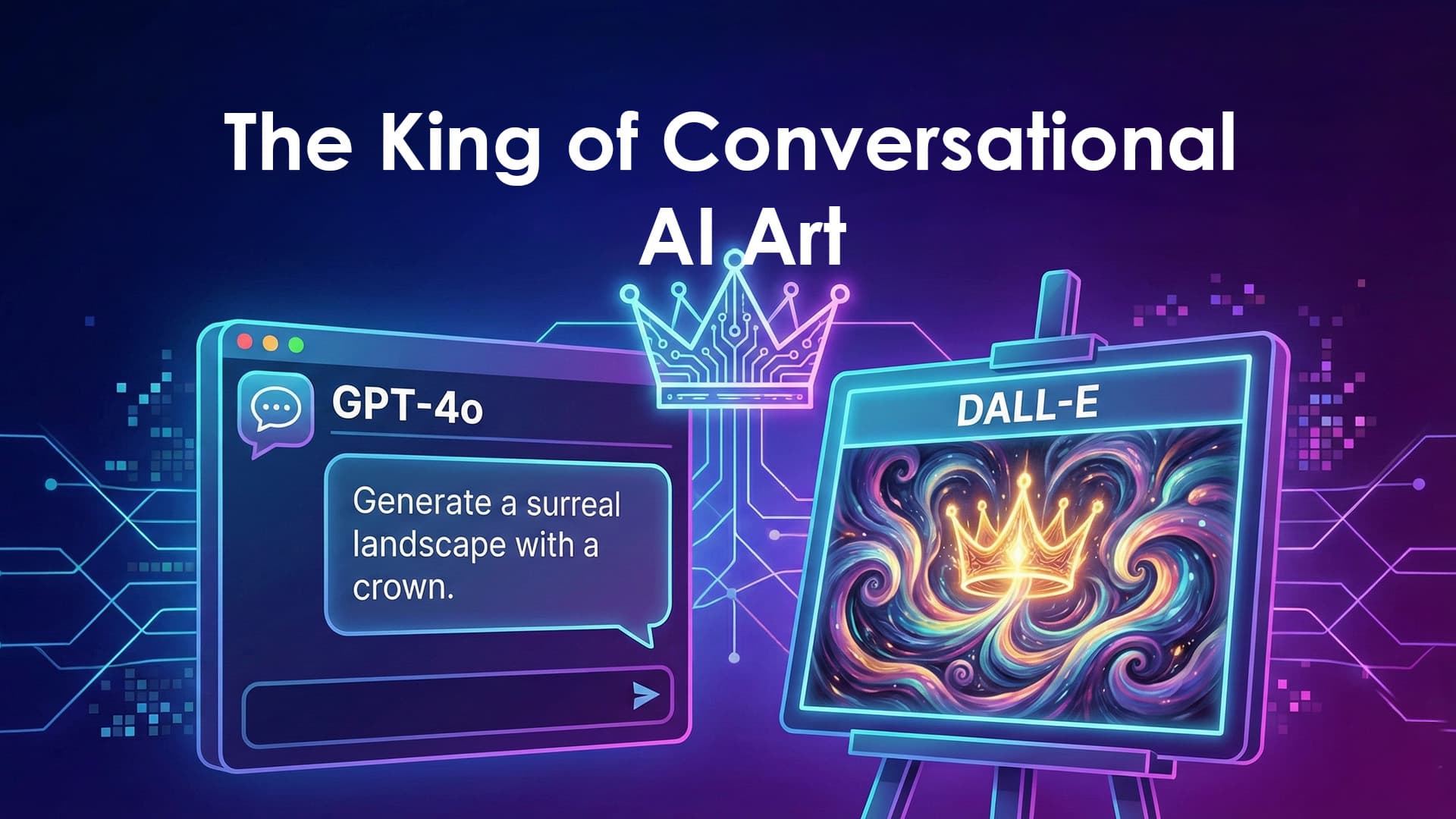
DALL-E, now primarily powered by GPT-4o image generation, has redefined how we create visuals. Since its full integration into ChatGPT in March 2025 (with the DALL-E 3 API scheduled for deprecation in May 2026), it offers an unmatched conversational approach to art.
Its strength remains its simplicity and precise prompt adherence. Unlike tools that require complex engineering, DALL-E is ideal for designers, bloggers, and business users who need illustrations, social media graphics, or concept art without technical headaches.
The Specs: Resolutions & Modes
DALL-E 3 supports fixed resolutions to ensure quality:
Square: 1024x1024
Landscape: 1792x1024
Portrait: 1024x1792
Users can choose between Standard or HD modes (HD adds detail but takes ~10 seconds extra). However, the GPT-4o integration enhances this significantly, offering higher resolutions up to 2048x2048, superior text rendering, and multimodal context awareness.
Usage Limits
Access requires ChatGPT Plus (~$20/mo). The usage caps are approximately 50 images every 3 hours (a rolling window that varies between 40-50 based on server load), shared across both DALL-E 3 and GPT-4o generation.
The Workflow: "No Prompt Engineering Needed"
Forget the complex prompt syntax of other tools. With GPT-4o, you start with a vague idea. The AI enhances it via clarifying questions or by auto-generating detailed prompts.
Conversational Refinement: You can refine images naturally—just say "make the sky sunnier" or "add a coffee cup."
Editing Tools: Use selection tools for regional inpainting and precise edits across Web, iOS, and Android.
Brainstorming: Use ChatGPT to brainstorm concepts or the OpenAI API for repeatable app integrations.
Multimodal Generation: GPT-4o adds native multimodal capabilities, allowing for better complex scenes and text-in-image accuracy.
Pros & Cons: The Honest Truth
✅ The Strengths
Incredible Natural Language Understanding: GPT-4o excels at detailed prompts, spatial relationships, and counting—fixing failures common in rival models.
Excellent Text Rendering: It is best-in-class for accurate, perspective-correct text in signs, logos, and graphics.
Business-Friendly: It produces photorealistic outputs with realistic lighting and anatomy. Plus, it includes strong safety filters and commercial rights for selling or merchandising.
Improved Realism: GPT-4o boosts photorealism and anatomical accuracy, delivering superior portraits, mockups, and depth of field.
Accessibility: It is beginner-friendly. Auto-prompts yield pro results from plain English.
❌ The Weaknesses
Slow Generation Speed: Creating an image takes 15–180 seconds. GPT-4o is specifically slower, often taking 60–180 seconds, and there is no batch generation in ChatGPT (hindering rapid iteration).
Inconsistent Characters: It struggles with multi-scene narratives. Without seeds or cropping, maintaining character consistency is difficult (GPT-4o improves this but is not perfect).
Strict Content Policy: It blocks public figures, brands, and "edgy" content, which limits creative freedom.
Subscription Locked: There is no standalone access; you must have ChatGPT Plus. It also lacks fine-tuning, custom aspect ratios, and direct outpainting/animation features.
Quality Dips: Some users have reported quality dips post-2024. Max resolution limits can also hamper large prints.
DALL-E vs. The Competition
DALL-E and GPT-4o lead the market in ease of use and photorealism/text benchmarks.
vs. Midjourney: DALL-E is less "artistic" but significantly easier to use. Midjourney still leads in fantasy and stylistic flair.
vs. Gemini: DALL-E offers similar ease but generally faster results than Gemini (though Gemini has better adherence in some specific logic tests).
vs. Canva: DALL-E provides superior raw generation, though Canva offers better editing interfaces.
vs. Stable Diffusion: DALL-E trails Stable Diffusion in customization and local control.
Verdict
If you need accurate text and a tool that understands complex instructions without fuss, DALL-E powered by GPT-4o is the best choice. It is the perfect tool for iterative design where you want to "talk" to your canvas.