
Consensus AI Review: The "Research OS" for Credible Science
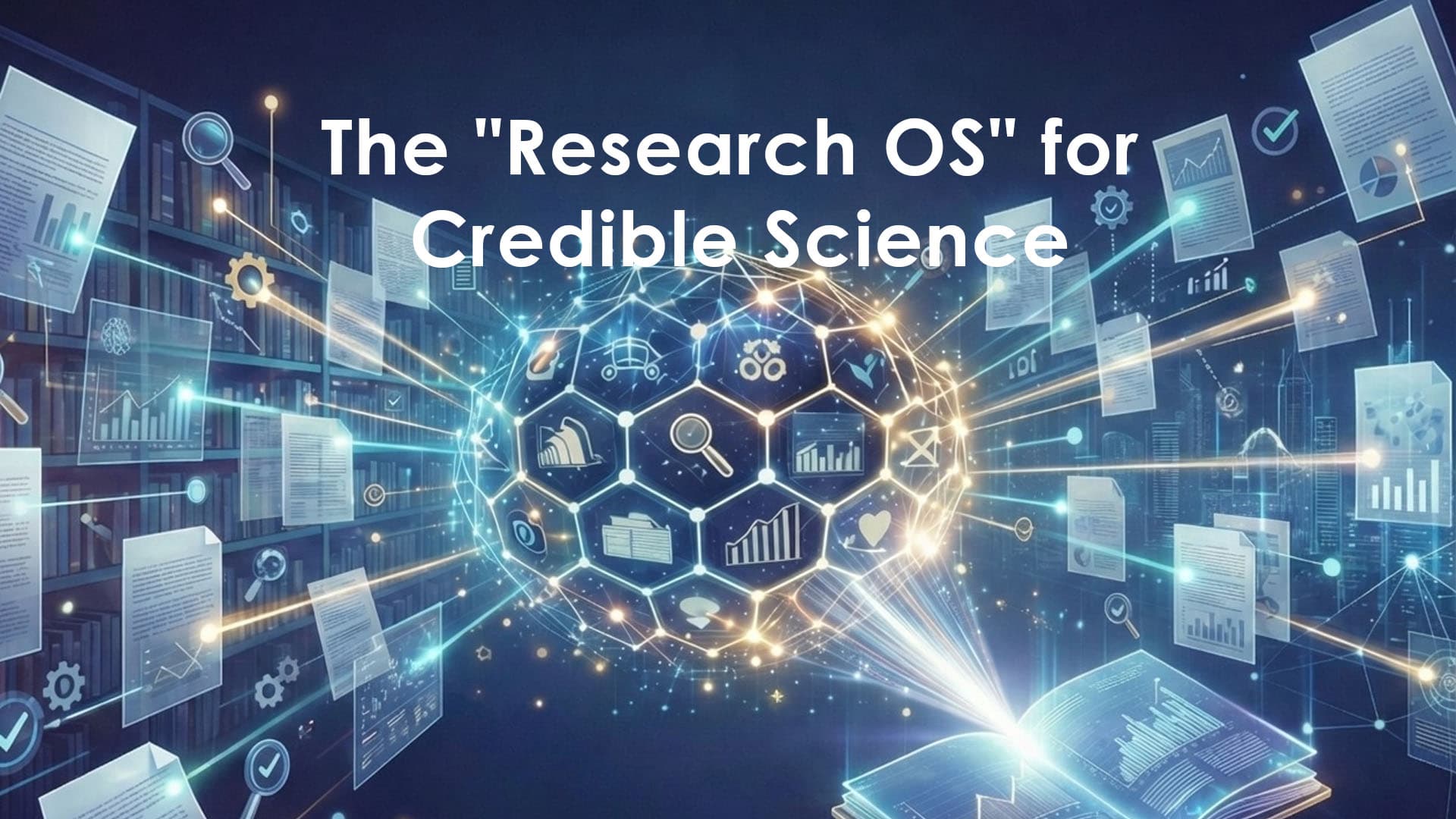
Imagine a search engine that doesn't just guess but backs every single answer with peer-reviewed science. Consensus AI is exactly that, an AI-powered research search engine and evidence synthesizer designed to operate as a "Research OS."
Unlike general web search engines that scrape the entire internet, Consensus focuses exclusively on scientific and academic content, specifically targeting health, medicine, social science, technology, and environmental research. It answers your research questions by searching a massive corpus of over 200 million peer-reviewed papers and book chapters, synthesizing these findings into evidence-based summaries with direct citations.
This rigorous approach eliminates the hallucination problems common in general LLMs, positioning it as a tool to find, organize, and analyze science 10x faster. It deploys AI only after searching academic literature, ensuring every response is grounded in real papers.
Workflow & Core Features
At its core, Consensus is built to triage research questions and validate evidence efficiently. Here are the standout features that define its workflow:
1. Consensus Search & Pro Search
Free users can run standard searches and a limited number of "Pro" searches.
Pro Search: Synthesizes findings from a fixed number of top papers (e.g., 20 per search), making the output closer to a real literature review than a standard web search.
2. Deep Search
This paid feature pulls from up to 50 papers to produce a structured narrative review. It includes detailed sections like "What the evidence says," "Limitations," and "Study details," saving hours of work for busy grad students or clinicians—though human verification is still recommended.
3. The Consensus Meter
A unique feature designed specifically for Yes/No questions (e.g., "Does creatine help muscle growth?"). It scans relevant papers and categorizes findings into "Yes," "No," or "Possibly," visualizing the direction of scientific agreement as a simple bar graph.
4. Study Snapshots
The AI automatically extracts key data from papers, such as Sample Size, Population, Study Design (RCT, Meta-analysis), and Methods. This power allows you to filter results effectively—for instance, ignoring "Case Studies" to focus only on "Meta-Analyses" with large sample sizes.
5. Comprehensive Filtering
Its ability to filter results by study type, sample size, publication date, and journal quality is essential for medical utility. This distinguishes between rigorous human studies and other data types.
6. AI-Powered Summaries
Using semantic search (not just keywords), the tool returns relevant research and provides answers backed by study citations. The Pro Analysis Mode offers advanced synthesis, structured outputs, and formatted research content.
Pros & Cons: The Honest Truth
✅ The Strengths
Hallucination-Resistant: It adopts a rigorous approach; if it can't find a paper, it won't make a claim. Every sentence is linked to a real DOI, ensuring accuracy.
Academic-Only Data: It filters out news, blogs, and opinions to provide "raw science," ensuring high-quality inputs.
Consensus Meter: This is a unique visualization tool that shows where evidence aligns, a feature that is rare among AI tools.
Huge Coverage: Access to over 200 million papers ensures broad disciplinary reach across scientific fields.
Lightning-Fast Synthesis: Summaries are built on academic consensus, not AI guesses, providing rapid, reliable overviews.
User-Friendly: It offers a minimal learning curve compared to complex databases like PubMed.
❌ The Weaknesses
Weak on Humanities: While it excels at Biology, Psychology, and Medicine, it performs poorly for History, Literature, or niche Sociology where data isn't in standard scientific formats.
Free Tier Limits: Access to advanced summaries (GPT-4 outputs), the Consensus Meter, and Study Snapshots is restricted on the free tier.
Oversimplification Risk: The AI can compress complex findings, potentially losing important nuance in the process.
Requires Human Interpretation: It is not a substitute for methodology literacy; meta-analysis quality and heterogeneity still need human eyes.
Dependent on Existing Research: If a topic is too new or fringe, the answers provided will be limited.
Not a Broad Search Tool: It misses non-academic context like industry reports or gray literature.
Pricing
Free
You get to experience a standard search engine with a "teaser" of AI. You get unlimited searches, but you are capped on "Understanding" features: 3 Deep Searches, 25 Pro Analyses, 10 Study Snapshots, and 10 Ask Paper messages per month.
Real Value: Useful only to find papers. You will still have to click through and read the abstracts yourself.
Verdict: Good for verifying a single fact once a month. Useless for serious workflow.Premium (Pro) $15/month ($120/year billed annually ~$10/mo)
You get Unlimited Pro Analyses (synthesizes top ~10-20 papers). This is the core product. The AI will read the top papers and synthesize an answer for every query you type. Limited to 15 Deep Searches per month (each synthesizes up to ~50 papers for a "Mini-Literature Review").
This replaces the manual "open 15 tabs and skim abstracts" workflow. 15 Deep Searches is enough for writing ~4 detailed articles a month, but not a full dissertation.Deep Plan $65/month ($540/year billed annually ~$45/mo)
The only difference is the Deep Search limit, which jumps from 15 to 200 per month.
This is strictly for users doing Systematic Literature Reviews (SLR). If you aren't writing a thesis or a heavy technical whitepaper where you need to synthesize 50+ papers daily, this is overkill.
Ignore this unless you hit the "15 Deep Searches" limit on the Pro plan consistently.
Consensus AI vs. The Competition
Consensus vs. Elicit
Elicit wins for systematic reviews and structured data extraction, capable of creating tables (e.g., "Sample Size vs. Dosage") for 50 papers. However, Consensus is the winner for Rapid Evidence Synthesis and Literature Review. Its Consensus Meter makes it more intuitive for beginners.
Verdict: Use Consensus for quick understanding; use Elicit for detailed systematic reviews.
Consensus vs. Scite
Scite is designed for validators. Its "Smart Citations" show if a paper has been retracted or disproven, quantifying supportive vs. refuting evidence. It is often considered the "best research tool reviewed" due to its seven-day full-feature trial. Consensus is faster for getting an initial overview and answering Yes/No questions.
Verdict: Use Scite to check your bibliography/validity; use Consensus to write the draft.
Consensus vs. Perplexity
Perplexity searches the entire web (blogs, news, wikis) and pulls technical documentation, making it better for general learning. Consensus wins on academic-only focus with no blog spam and no hallucinated sources, making it superior for health/medical research.
Verdict: Use Perplexity for general learning/technical docs; use Consensus for academic citations and "algorithm selection" problems.
Final Verdict
Consensus AI is a powerful evidence-based research tool, not a general internet search engine. It excels at fast synthesis of peer-reviewed literature, making it invaluable for grounding decisions in credible data. It is the ideal tool for university students, health/fitness optimizers, content creators, academic researchers, clinicians, and R&D teams. However, it is less useful for fiction writers, general web research, or topics without peer-reviewed research.
Decision Guide:
Use it for: Triaging large research questions, empirical sciences, and evidence validation.
Don't use it for: Humanities research, open-ended questions, breaking news, or final publication-ready research.