
AIVA AI Review: Exploring the Future of Music Composition
Most AI music tools today are chasing the "pop star" dream generating vocals and radio hits. AIVA (Artificial Intelligence Virtual Artist) takes a completely different path. It is a generative AI platform designed for serious composition, specializing in instrumental backing tracks based on deep music theory.
The Specialist: Beyond the "Radio Hit"
Think of AIVA as the "undisputed specialist" for cinematic soundtracks, orchestral arrangements, and classical-style music. While other models are trained on Top 40 hits, AIVA was trained on over 30,000 classical compositions from legends like Bach, Beethoven, and Mozart, alongside contemporary film scores.
A Legitimacy Milestone
AIVA has achieved something rare: recognition by SACEM, marking a significant milestone in the legitimacy of AI-composed music. It stands out for professional needs especially for films, games, and trailers where sweeping orchestration and emotional storytelling are required, not just a catchy chorus.
Workflow & Core Features
1. Generation Process
The Prompt: You start by selecting a style (from 250+ presets), mood, key, tempo, and duration (ranging from 30s to 5min).
Speed: Compositions are generated in seconds to a few minutes.
Styles: The range is impressive, covering Cinematic, Electronic, Pop, Jazz, Fantasy, Sea Shanty, Tango, Chinese, and more.
Pre-Generated Library: If you're in a rush, it includes 150+ human-arranged tracks for immediate use.
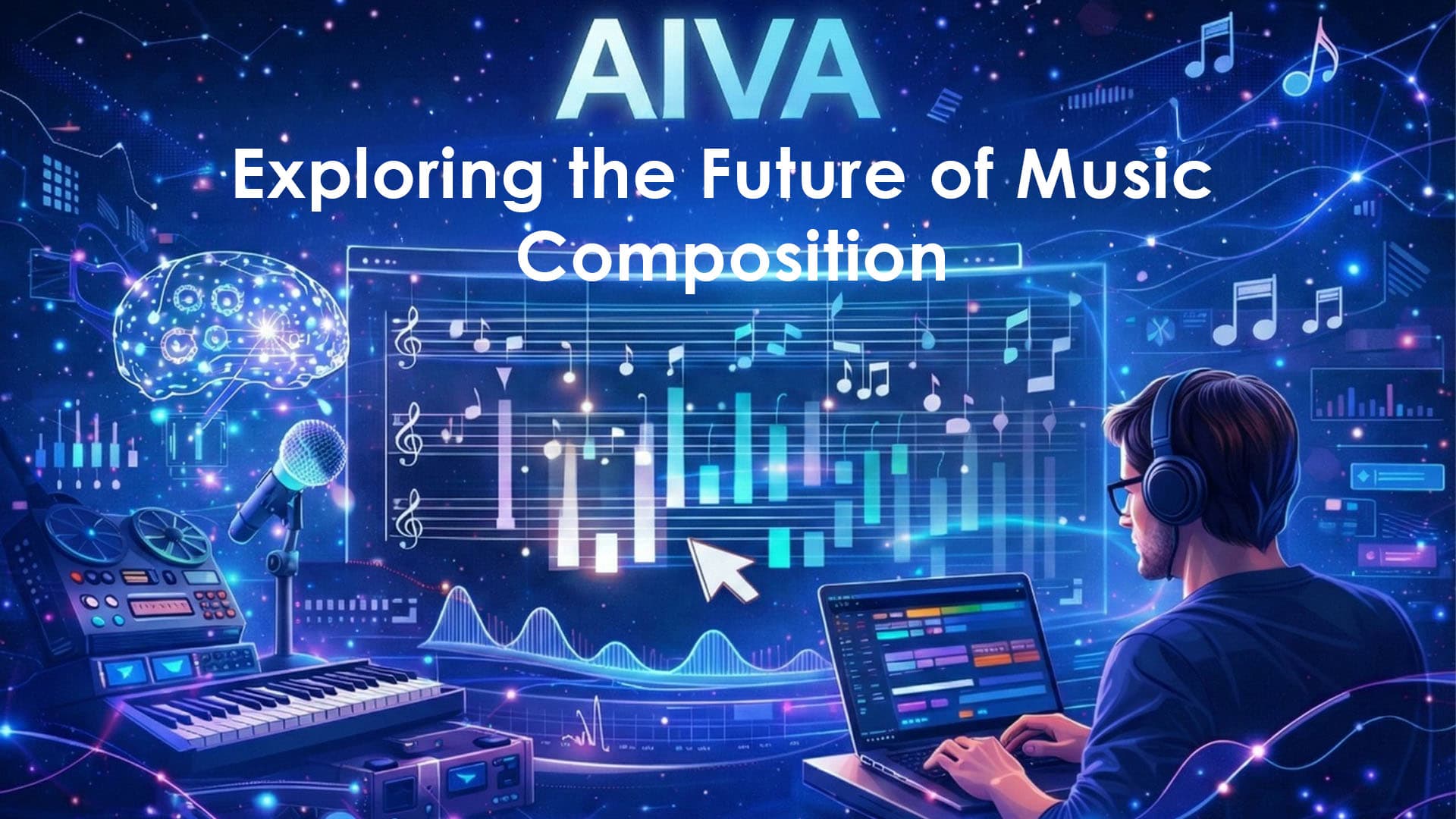
2. The "Piano Roll" Editor (Granular Control)
This is where AIVA separates itself from the toy apps. Most AI tools give you a flat MP3 file you cannot touch. AIVA provides a professional-grade track editor that functions like a Digital Audio Workstation (DAW).
Deep Editing: If the AI generates a beautiful melody but a terrible drum beat, you can simply delete the drums. You can change the key, move specific notes, or adjust the tempo after the song is made.
Why Pros Use It: This structural control allows composers to handle tedious arrangement tasks while retaining full creative ownership.
3. MIDI Export (The "Killer Feature")
Workflow: You can export your composition as MIDI files.
Integration: This is a game-changer. It enables you to import the raw musical data into professional DAWs like Logic Pro or Ableton, re-orchestrate the themes with better virtual instruments, and refine the mix yourself.
4. Influence Upload
Function: You can upload a reference track (e.g., a Mozart piece or your own rough demo).
Analysis: AIVA analyzes the tempo, time signature, and chord progression to generate a new track that mimics that "vibe" without plagiarizing the melody.
5. Formats & No Vocals
Outputs: MP3, WAV, MIDI.
Important: AIVA creates instrumental music only. There is no text-to-singing feature here.
Specific Use Cases
Film & Video Soundtracks: Generates thematic pieces (dramatic builds, suspense) without the cost of hiring a composer.
Game Audio Design: Ideal for background music/loops across levels. It is praised in MusicLibraryReport for these hybrid workflows.
Content Creation: Perfect for YouTube/Podcast background music that avoids expensive licensing fees.
Branding: Quick intros and ambient tracks to establish brand identity.
Education: Aspiring composers use it as a learning tool to experiment with structure and orchestration.
Pros & Cons: The Honest Truth
✅ The Strengths
Full Copyright Ownership: On the Pro Plan, creators own 100% of the copyright forever with unrestricted monetization. This is legally clearer than competitors like Suno or Udio.
High-Quality Orchestral Output: It produces professionally sounding, emotionally coherent compositions that are far superior to generic loops.
Granular Control: The ability to edit notes inside the browser is a feature almost no other AI tool offers.
"Safe" Data: Unlike competitors currently being sued by major labels, AIVA’s training data is allegedly "clean" (classical/public domain).
Structured Composition: It understands structure "Verse, Chorus, Bridge." You can tell it to make the Intro longer or the Chorus louder.
❌ The Weaknesses
The "MIDI" Sound: Out of the box, it lacks the "warmth" and "air" of neural audio models like Udio. It sounds like a high-quality video game or karaoke track, rarely like a real band recording.
No Vocals: It is weak on pop/lyrics because it is purely instrumental. YouTube testers note it struggles with "highly experimental genres."
Steep Learning Curve: The interface looks like a DAW. If you don't know what "BPM" or "Time Signature" means, you may be lost.
Export Workflow: There is no deep native DAW integration; you must manually export and import files.
Pricing
Free
You can download 3 tracks, but AIVA owns the copyright. You strictly cannot use this for any commercial purpose (even a monetized YouTube video). Max 3 minutes. MP3 & MIDI only (no high-quality WAV).
Real Value: Use this only to test if the AI can generate the genre you need. It is useless for actual creators.Standard Plan (€11/mo)
You can monetize the music on YouTube, Twitch, and TikTok, but AIVA still owns the copyright. You are essentially "renting" the rights. You cannot sell the music itself (e.g., on Spotify, Apple Music) or use it for client work.
Tech Limit: 15 downloads/month. Still restricted to MP3 & MIDI (bad for professional editing).
Real Value: Perfect for YouTubers who just need background music and don't care about owning the IP.Pro Plan (€33/mo)
This is the only plan where YOU own the copyright.
The Professional Edge: Unlocks Uncompressed WAV and Stems (separate audio tracks), which are essential for video editors and game developers to mix the audio properly.
Real Value: Mandatory for Game Devs, Filmmakers, and Musicians. If you want to sell the track or hand it to a client, you must buy this.
AIVA vs. The Competition
AIVA vs. Suno
Suno is the best overall for most users due to its vocal generation (remarkably human-like) and ease of use for Pop/Rock/Country. In April 2025 benchmarks, Suno generated the most commercially viable songs.
The Verdict: Use Suno for songs with vocals. Use AIVA for instrumental scores and legal safety.
AIVA vs. Udio
Udio offers unmatched vocal realism and "radio-ready" songs. However, AIVA has a more established legal standing.
Critical Note: Udio settled copyright lawsuits with Universal and Warner in October–November 2025. As part of the settlement, it immediately suspended downloads (users can create but not export).
The Verdict: Udio for modern production (pending export status); AIVA for reliable professional workflows.
AIVA vs. ElevenLabs Music
ElevenLabs Wins: Best vocal synthesis in the industry; Better for ads/commercials with vocals.
AIVA Wins: Deep instrumental scoring; MIDI capabilities.
Final Verdict
AIVA is one of the strongest AI music generators in the creative workflow today, specifically for cinematic, orchestral, and ambient compositions. It is a "power tool" for media pros who need control, not just a "magic button" for casual fun.
Decision Guide:
For Composers/Developers (BUY): It is a powerful "Idea Generator." If you use the MIDI export feature to refine the track in Logic/Ableton with real instruments, you have a winner. The Pro Plan is essential for copyright ownership.
For General Users (SKIP): If you want a radio-ready song with vocals, AIVA sounds too "fake" compared to Suno. The lower tiers are too restrictive.